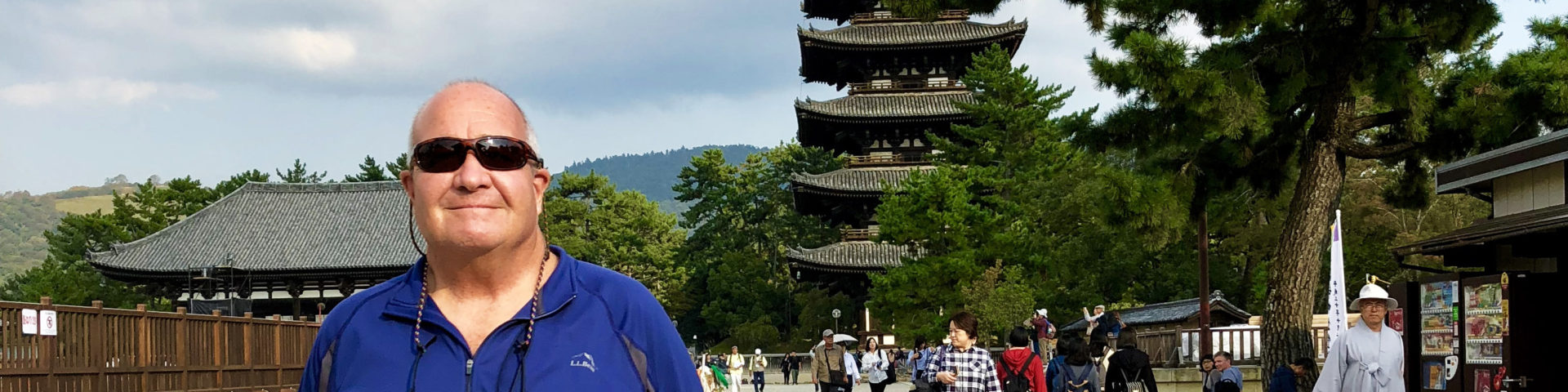


We returned to the SIXT car rental in Gaia and were heading south by noon in a dinky black Peugeot hybrid SUV, which meant we got great gas mileage, as with most European cars. That was handy because we were going to cover a lot of ground, and it cost about $50 to fill up the small gas tank. After five days in Porto, we were ready to cut her loose.

Two hours down the A1 lay the world-famous Batalha Monastery (Mosteiro de Santa Maria da Vitória), a glorious Gothic masterpiece designated a UNESCO World Heritage site in 1983.

There was a large, free parking lot located directly north of the monastery. The place was surprisingly crowded for a rainy day — mostly Asians on bus tours.

We snagged some yummy lunch at the King’s Barbecue, owned and operated by a family of African women who spoke no English but who were very nice and served a mean barbecue — something we didn’t really expect.

Our plan was to do a two-hour “Power Tour”. There are plenty of guidebooks to help you navigate around the place. But we didn’t go the guidebook route on this trip, which was fine because there were plenty of bilingual interpretive signs to tell us what we were looking at, and Claude AI filled in the blanks.

The bloodstained stories surrounding this national treasure should be the basis for a future HBO series. They could call it The Battle of the Two Johns. And it would rival Game of Thrones without having to make anything up or down.

Batalha is a town that quite literally wouldn’t exist without a massive family feud and a very panicked prayer.

The conflict centered around the Portuguese Succession Crisis, a twisted dynastic struggle over who would rule Portugal.

The crisis began in 1383 when King Ferdinand I of Portugal died, leaving no sons. His only child was Princess Beatrice, and her marriage to King John I of Castile, Spain, raised the alarming prospect that Portugal would lose its independence and be absorbed into Castile. Many Portuguese nobles fiercely opposed this.

The common folk and traditional aristocracy rallied behind John (João), the Grand Master of the Military Order of Aviz, a natural (illegitimate) son of the previous king, Peter I of Portugal. The rival factions — pro-Castile vs. pro-independence — plunged the kingdom into conflict. Basically, it was a Portuguese bastard son against a scheming Spanish King with a traitorous Portuguese wife.

The climax came at the Battle of Aljubarrota on August 14, 1385, when the forces commanded by King João I of Portugal and his Constable Nuno Álvares Pereira, supported by English allies, defeated the army of King John I of Castile. The result was a decisive Portuguese victory, ruling out Castilian ambitions to the Portuguese throne and establishing the new House of Aviz dynasty.

To celebrate his victory and fulfill a promise he made to god right before the battle that if he defeated the vastly superior Spanish army, he would build an enormous church in honor of his divine deliverance. To fulfill that obligation, João I immediately ordered the construction of the monastery of Santa Maria da Vitória da Batalha and the founding of the town of Batalha near the battle site, which gave the town its name. (“Batalha” literally means “battle” in Portuguese.)

Batalha Monastery (Mosteiro de Santa Maria da Vitória)
This royal family feud between the House of Burgundy/Castile (backing Princess Beatrice and her Castilian husband) and the House of Aviz (the illegitimate Portuguese claimant, backed by the people), on which Portugal’s independence ultimately hinged. And if the outcome had swung the other way, Portugal might be Spain today.

It took several decades (and most of the national treasury) to complete the Monastery of Batalha, a UNESCO World Heritage site that looks like a cathedral carved from crystallized honey. The whole place just blew us away!

Inside the Founder’s Chapel, we found João I and his English queen, Philippa of Lancaster, resting on a joint tomb. In a rare display of royal affection (or perhaps medieval PR), their stone effigies are shown permanently holding hands — a symbol of the long-standing Anglo-Portuguese Alliance, which is still technically active today.

Tucked away nearby is their son, Prince Henry the Navigator, the man who essentially launched the Age of Discovery despite being famously prone to seasickness and never actually going on many voyages himself. We especially like the goofy headgear he was wearing. It was called a chaperon, a rolled/draped umbrella hat, fashionable among 15th-century Burgundian and Portuguese nobility (see below). Imagine a room full of fancy-pants aristocrats all wearing those giant headdresses, and trying their best not to smash into one another. How could they sit together at a dinner table? What gets into rich people?

Next, we visited the Chapter House and were treated to an architectural wonder of its day. The square limestone ribbed ceiling vault is so wide and lacks any central support that contemporary architects were convinced it would collapse. Legend says that construction was so dangerous that it was carried out entirely by condemned prisoners on death row. The logic was simple: if it fell, they were going to die anyway; if it stayed up, they got a pardon. It’s still standing and an outstanding example of death-sentence architecture.

The real showstopper at the Batalha Monastery is the Capelas Imperfeitas (Unfinished Chapels). King Duarte I wanted a grand mausoleum, but he died of the plague before the roof was finished. Subsequent kings got distracted by building the Jerónimos Monastery in Lisbon and running an empire, and so the chapels remain roofless to this day. It is one of the few places in the world where a construction “fail” became a masterpiece, allowing the sky to serve as the chapel’s ceiling while moss grows over some of the most intricate stone carvings in Europe.

If you want to see the main church, it’s free. However, the €15 ticket for the Unfinished Chapels and Cloisters is essentially a mandatory purchase for your soul — the stone lacework there is simply too good to skip.

Batalha Monastery Cloisters
Our three-hour stop at the Batalha Monastery was one of those lucky travel guesses. I really wasn’t sure what to expect when I decided we should check it out. Not a single person suggested to us that it would be a good stop. And it turned out to be one of the highlights of our trip to Portugal!

Batalha Monastery Crypt Room Paintings
About 45 minutes east of Batalha sits the Medieval city of Tomar, a place where history isn’t just written in books; it’s carved into windows and balanced precariously on the heads of local women. This riverside town was the 12th-century headquarters for the Knights Templar, a group of warrior-monks who were essentially the medieval version of special forces with a side hustle in international banking.

The Convent of Christ towers over the town, a sprawling complex that took five centuries to finish, proving that even in the Middle Ages, contractors were prone to delays. And you need to set aside at least two or three hours to explore its many nooks and crannies.

Knights Templar Castle attached to the Convent of Christ on the hill above town
The heart of the convent is a circular oratory where knights supposedly attended Mass on horseback. It’s an amazing structure designed so they could be blessed for battle without having to find a parking spot for their steeds.

The convent is also one of the finalists for the world’s most famous piece of “Manueline” architecture, which is basically what happens when a stonemason goes on a maritime-themed bender. In places, the convent walls are covered in stone ropes, coral, and seaweed, making them look less like windows and more like the bottom of a 16th-century shipwreck or a scene from “Pirates of the Caribbean”.

When the Pope tried to shut down the Templars in 1312 for fear they were growing too rich and powerful, the Portuguese king simply crossed out “Templars” and replaced it with “Order of Christ”. It was the ultimate corporate rebrand, allowing the knights to keep their castle and eventually fund the Age of Discovery.

“The Curse of Oak Island” has recently put the Templars back on the curiosity map, but if you visit Tomar during the Festa dos Tabuleiros (Festival of the Trays), which is held only every four years (the next in July 2027), you’ll see the ultimate feat of balance.

Hundreds of women march through the streets carrying tabuleiros — towers of 30 loaves of bread decorated with paper flowers, each exactly the same height as the woman carrying it.

These floral bread-hats weigh about 35 lbs. Traditionally, the bread was given to the poor after the parade, but today, if you register with the town hall in advance, you can still snag a “blessing pack” of meat, bread, and wine.

Locals spend an entire year hand-making thousands of paper flowers to decorate the streets, which is why they can only do it every four years.

Then, there’s the Matchbox Museum, housed in a 17th-century cloister. The Museu dos Fosforos holds Europe’s largest collection of matchboxes—over 40,000. It started when a local businessman went to London for Queen Elizabeth II’s coronation, fell in love with matchboxes, and just never stopped collecting them.

Near our hotel was a lovely greenway called the Aqueduct of Pegoes: A nearly four-mile-long 16th-century aqueduct that looks like a Roman relic but was actually built by the Templars just to ensure the monks had plenty of water for their gardens. The brutal warriors loved their flowers and natural beauty. Imagine that.

Batalha and Tomar would be a great name for a Vegas lounge act. But they are, in reality, towns that were really cooking way back in the 1300s, when the Kings and the brave Knights Templar of Portugal celebrated life with death.

There are two large Polaroid-perfect paintings in the Templar Church in Tomar that offer a chilling glimpse into life at the top of the food chain during those turbulent times. The first painting glorifies some Knights Templar who are happily beheading their enemies while their buddies kick the victims in the ass. In the second painting, they are playing with the severed heads as they drunkenly dine around an elaborate banquet table. Clearly, these were not people to be trifled with. But who were these gallant Christian worshippers who talked to angels and cut heads and deals for glory?

I have recently been taken to task by some native Portuguese who have read my travel posts and lectured me about what constitutes the “real Portugal” and where one might find it. Those are both interesting and valid points of discussion.

As we were driving south to Evora, I found myself pondering this notion that there is, in fact, a place in Portugal — or any country, for that matter — that represents the soul of a nation.

We followed winding back roads through a vaguely Montana-like high-plains region covered in bushy cork trees. There were herds of burly brown cattle and freshly shorn sheep, fields of grain, intermittent estates with sturdy metal front gates, the occasional small town — Tramaga, Montargil, Pavia, Arraiolos — and fertile farmland vistas stretching far and wide. We saw little trace of human activity.

About an hour into the mesmerizing drive, I suddenly realized that we were undoubtedly following an ancient horse path once ridden by the Knights Templar. What did this land look like back in their time? And what small part of their Medieval passion play still lives on in real Portugal today? The obvious answer that comes to mind is the monumental structures they built that shine a light into the distant past and whisper over our uncertain future.


[386651]supplies professional anti-violence equipments and solutions for the whole world with strong and perfect production capacity. anti-violence.org
Видання nashesiaivo.space — це вітчизняний онлайн-журнал про медійних персон, шоу-бізнес і культуру.
На порталі представляють бесіди із акторами, зіркові новини, розбори скандалів, публікації музичні матеріали, світ кіно, світ моди і стиль. Серед свіжих тем — бесіди з музикантами, прогнози щодо премій, огляди реаліті-шоу і камбеки музикантів. Публікуються найпопулярніше за тиждень, новий випуск і можна отримувати дайджест.
Коротко й по суті — для читачів, які прагне знати культурних подій України.
Ресурс Nashe Siaivo – це українськомовний портал про медійних персон, світ шоу-бізнесу й мистецьке життя.
На ресурсі розміщують інтерв’ю із акторами, новини про зірок, розбори скандалів, огляди про музику, світ кіно, стиль та модні тенденції. Серед останніх публікацій — діалоги з творцями, передбачення переможців премій, огляди реаліті-шоу і нове від знайомих виконавців. Доступні найкращі матеріали тижня, актуальний випуск і доступна опція отримувати збірку головного.
Лаконічно та змістовно — для людей, які мріє стежити подій українського шоу-бізнесу.
Платформа pivnichnyiazymut.space — україномовний інтернет-журнал із надійними рішеннями на побутові задачі.
Тут публікують матеріали на теми кулінарію, здоров’я та самопочуття, присадибну ділянку, техніку, красу, психологічне здоров’я та біографії відомих особистостей. У переліку тем — строки придатності продуктів, оформлення лікарняних, догляд за виноградом, косметичні процедури, поради при вигоранні. Без зайвих обіцянок — тільки практичні і дієві орієнтири.
Корисний майданчик для користувачів, хто шукає доступні рішення на повсякденні та практичні запитання.
Майданчик pivnichnyiazymut.space — україномовний інтернет-журнал з перевіреними рішеннями на щоденні проблеми.
На ресурсі розміщують тексти про кулінарію, здоров’я та самопочуття, дачу, техніку, догляд за собою, психологію та життєписи знаменитостей. Серед тем — строки придатності продуктів, лікарняні листи, обрізка винограду, догляд за шкірою, поради при емоційному вигоранні. Без пустих обіцянок — виключно точні і дієві підказки.
Зручне місце для тих, що шукають зрозумілі поради на повсякденні і нагальні запитання.
Хочу розповісти про корисним та зручним проєктом — laeoloef.space — стильним і простим каталогом українських сайтів.
Сайт виглядає акуратно, адаптивно і комфортно працює.
Інтерфейс простий, без зайвого сміття, з приємним дизайном і українською мовою.
Особливо сподобалося:
• Повна адаптивність (чудово виглядає на телефоні)
• Чистий мінімалістичний стиль
• Швидке завантаження
• Зручна навігація
Кому треба швидко знайти якісні українські ресурси — варто відвідати.
Салют автомобилисты!
К сожалению, что в Питере любой водитель не застрахован от того, чтобы завязнуть в опасную разбирательство с ДПС.
Именно тогда приходит понимание, что без юридической поддержки можно проиграть.
Мы предлагает широкий перечень юридических действий автоюриста. https://avtojurist-spb.best/
I recently found a site with plenty of interesting news — https://news129.online
The website offers a good selection of news and informative articles. A useful website to visit for fresh news and updates.
Worth checking out.
Очень интересно! Хочу порекомендовать Вам сайт про технтку и гаджеты https://znayka.com.ua/
Сайт teplakuhnya.space зосереджується на простих і дієвих стравах без зайвої складності. Контент розподілені за категоріями:
– перші й другі страви
– випічка та хлібобулочні вироби
– салатні страви
– консервація
– десертні страви
– напої та напої домашнього приготування
– кухонні поради
Серед нових публікацій, зокрема:
– борщ із щавлем (з акцентом на пропорції, щоб не вийшов надто кислим)
– варення з малини за 15 хвилин (ягоди зберігають цілісність)
– хліб без замішування (ніч у холодильнику + чавунний казанок)
– поради з зберігання зелені
– салат із печених буряків і бринзи
– сирник без борошна
– домашній узвар
– капуста тушкована з ребрами
– прозорий бульйон з курки
Ресурс позиціонується як база рецептів та порад, що справді працюють на звичайнісінькій домашній кухні. Весь контент українською.
Ресурс Plandiy пропонує короткі та зрозумілі розбори на актуальні питання про закони, ТЦК, навчання й побут. Кожен розбір складена за чіткою структурою: вердикт → підстава → дата перевірки. Без зайвого тексту. Нові розбори з’являються щодня.
можно проверить ЗДЕСЬ
blacksprut onion
Коротко: щоденна стрічка щодо місто і регіон без води. На сайті розміщують про місцеві події, ТЦК, транспорт, економіку, надзвичайні події, дозвілля тощо. Кожен матеріал має автором і дату публікації. На головній сторінці розміщують лічильник ворога за даними Генштабу ЗСУ.
Повна стрічка і матеріали — на frankifiranki.space
Кто делает реакции на посты в тг. Быстро и недорого. Смотрел несколько, посоветовали этот: nakrutka-reakcij-v-tg-1682.ru. Можно брать. Для постов хватило.