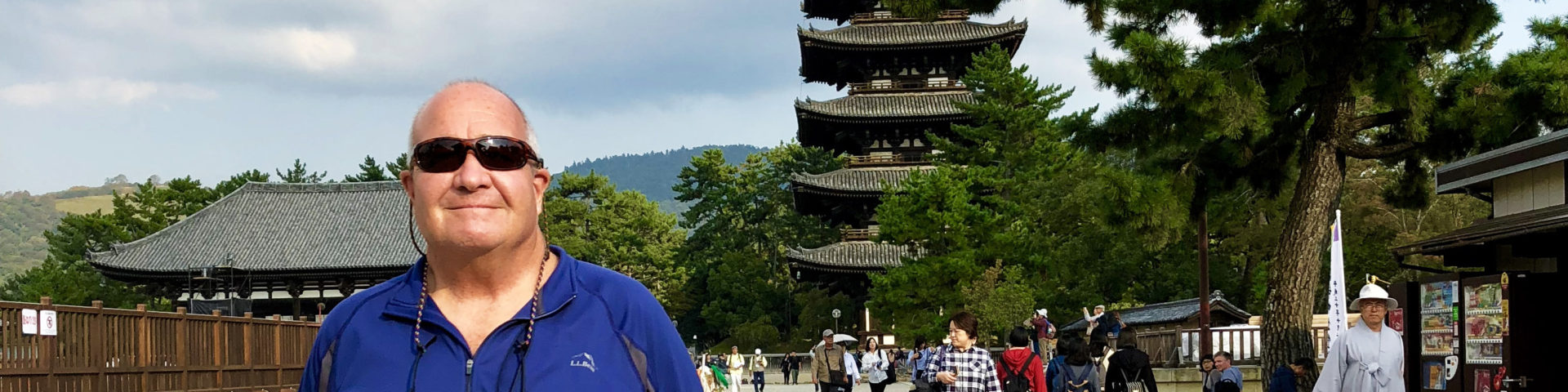


Sydney and Melbourne each are home to over five million people, and they are the nicest “new” cities I have ever seen. Everything is fairly recent, and something from the 1800s is considered really old. So, if you aren’t historic, then you’re free to aim for the stars. Australian architecture tends to be cutting-edge, and nothing in the U.S. rivals its sleek and stylish appeal. It would be a pleasure to live in either city.

Traveling down under can be fairly expensive—it’s surrounded by ocean in the middle of nowhere, so shipping costs are high. If it ain’t homegrown, it costs more than in the States. But the current exchange rate favors the U.S. dollar.

Gas is about $4.60 a gallon, but they sell it by the liter. Yes, they do metric like the rest of the world. And there are four liters to the gallon.

Beer rules in both countries. A pint of good local beer—and there are many—costs about $10 US.

Because so much of the food is locally sourced, dining out is quite reasonable. A standard breakfast or lunch runs about $20, and a dinner about $30, not including drinks or tips. Tipping is not expected and is usually done to reward exceptional service.

Certain foods are considered their national dishes. I sampled quite a few, and some of my favorites included: Australian Tim Tams (flavored crackers), New Zealand meat pies (my favorite!), and Hokey Pokey (ice cream with pieces of caramelized honey). Fish and chips were our go-to meal.

Melbournians, and Australians in general, are crazy about bananas. Melbourne’s climate is suitable for growing bananas, and a lot of people cultivate them in their home gardens. The Melbourne University Garden regularly hosts events and workshops featuring bananas. And we heard from several locals that they gauge the health of the economy by the price of bananas.

You see a lot of floating bars along the Yarra River in Melbourne, reminiscent of the cafes along the Seine in Paris. Ponyfish Island, under the Southbank Pedestrian Bridge, is a big favorite. Supafish is a popular psychedelic fun spot on the water. And Afloat is a floating bar that pops up on the Yarra River every spring. The floating saloons got their start many years ago as a way to avoid property taxes and serve women.

Both countries have indestructible and nearly impossible to counterfeit colorful paper-plastic money. It’s like utilitarian art.

Melbourne has become a go-to convention city for Asians who love doing business in a delightful place where the Chinese presence has been front and center for over a century. It has also become an in-demand university town for Asians and a place for them to park their money safely. Melbourne is definitely stealing clients and students from America.

We witnessed the future of the restaurant business in Australia and New Zealand. I’m guessing it came about when COVID-19 hit, and there were no service people. These days, it’s rare to see anyone waiting tables. You choose a table and then order at the bar, giving them your table number. Then you pay. They bring your food. And that’s it. The bartender can handle everything. And there’s no more tipping! Restaurant workers get paid a living wage and seem quite content.

Every small city in New Zealand, which is to say pretty much every city, looks exactly alike. It’s like there’s a mandated architectural layout and style. And it ain’t pretty. Inna and I had a running joke every time we drove into a Kiwi town. Inna would say, “We’ve been here before, right?” And I would say, “At least once.”

The houses in New Zealand are plain and drab, but they aren’t a reflection of poverty. It’s more like they don’t need a big fancy home to be happy. And this attitude goes double for the Māori. They tend to live in dilapidated homes, even when located on rich agricultural land.

Commercial sailing with sturdy steel ships lasted a long time in Australia because its economy heavily relied (and still relies) on bulk exports of wheat, wool, coal, and minerals. These cargoes were often low in value and high in volume, making big clipper ships ideal. Steel-hulled sailboats, while slower than steamships, had low fuel and crew costs, making them perfect for long-haul cargoes. But it was a dangerous business, sailing through the Roaring Forties and around the Capes. It is estimated that there was a forty percent death rate on ships doing the three-month voyage to Europe. This might explain why the Aussies and Kiwis currently dominate sailboat racing today. They are fearless and it’s in their blood!

Australia and New Zealand have very similar economies; Australia is just bigger. They have abundant natural resources and high standards of living. They both are heavily dependent on tourism and have strong financial sectors. Australia is a mining powerhouse, while New Zealand excels at agriculture, especially dairy and timber. They import a lot of oil, electronics, and vehicles, and their largest trading partners are in Asia (China, Japan, Korea, and India).

Living at the bottom of the earth, far removed from the rest of the world, and surrounded by often angry oceans, the Aussies and Kiwis face some real challenges. Climate change is front and center, and that’s why they take it very seriously. Their amazing successes and economic rise have created a housing affordability and infrastructure crisis. The costs for goods and services are steadily rising, and people are feeling the pinch. Which means, they’re like every other nice place in the world, be it Colorado or Barcelona.

What separates the folks down under from, let’s say, America, my homeland, is their critical thinking skills and forward-looking perspective. They aren’t living in the past—maybe because there isn’t much back there to look at in the rearview mirror. They just get on about their business and look to the future with a smile. I heard very little whining.

The thing I liked the best about the people who live at the bottom of the world was the way they talked. It’s lyrical and funny. And their outlook on life can be summed up with a phrase we heard wherever we went and no matter what was happening. The Aussies and the Kiwis both like to say, “No worries, mate, she’ll be right.” This reflects a national stoicism that suggests everything will be okay in the end.

And that’s a fair dinkum way to look at things, if you ask me.

uakibh
Hello,
Club music 2025 download private server, https://www.0daymusic.org
MP3/FLAC, label, music videos,Fans giving you full access to exclusive electronic, rap, rock, trance, dance… music.
0day team.
Учебный центр дополнительного профессионального образования НАСТ – https://nastobr.com/ – это возможность пройти дистанционное обучение без отрыва от производства. Мы предлагаем обучение и переподготовку по 2850 учебным направлениям. Узнайте на сайте больше о наших профессиональных услугах и огромном выборе образовательных программ.
apcvii
668o0a
Dupixent
6z3f63
3a6bwh
0kt1uf
jtlzg3
So, reader, I accidentally found something weirdly brilliant, I had to stop everything and broadcast this.
This thing is not your usual stuff. It’s packed with smooth UX, next-level thinking, and just the right amount of interface wizardry.
Sound too good? Alright, go look right this moment!
Still scrolling? Fine. Imagine a cat in a hoodie built a site after watching sci-fi. That’s the frequency this content gives.
So click already, and send it to your friends. Because honestly, this is what your brain craved.
You’re welcome.
I went over this web site and I think you have a lot of fantastic information, saved to my bookmarks (:.
gxwrv1
3g1sxa
s3fvif
F*ckin’ amazing issues here. I am very glad to peer your article. Thanks a lot and i am taking a look ahead to contact you. Will you please drop me a e-mail?
This actually answered my drawback, thanks!
Hello.This article was extremely fascinating, especially since I was investigating for thoughts on this issue last Sunday.
I have been reading out some of your stories and i must say pretty clever stuff. I will definitely bookmark your site.
I not to mention my guys appeared to be looking at the good tips on your web page while unexpectedly got a terrible feeling I had not thanked the web blog owner for those secrets. The women ended up for this reason glad to study all of them and now have extremely been making the most of these things. I appreciate you for really being simply kind and for choosing this form of good useful guides most people are really desperate to know about. My very own honest regret for not expressing gratitude to you sooner.
I don’t even know how I ended up here, but I thought this post was great. I don’t know who you are but certainly you’re going to a famous blogger if you are not already 😉 Cheers!
Heya i am for the primary time here. I came across this board and I to find It
really helpful & it helped me out a lot. I hope to give one thing back and aid others such as you aided me.
Greetings! Very helpful advice on this article! It is the little changes that make the biggest changes. Thanks a lot for sharing!